
Knowledge Center  > Guides

GUIDELINE

What is Guided Selling?

Benefits, Strategies, and Best Practices for Manufacturing

By Elfsquad Experts - October 15, 2024

Introduction to Guided Selling

Guided Selling is a structured sales approach that helps manufacturers configure complex products and guide customers to the right solution, without relying on engineering for every order. It is built for industries where products have many variants, configurations are technical, and a wrong quote is expensive.

This is not about automating a sales pitch. It is about giving your team the structure to ask the right questions, present the right options, and generate accurate quotes from the first conversation.

How Does Guided Selling Work?

Guided Selling works together with CPQ software to structure the configuration and quoting process from start to finish:

  • Understanding Customer Needs: The process starts by gathering information about what the customer actually needs, use case, environment, performance requirements. This shapes every recommendation that follows.

  • Targeted Questions and Valid Options: Based on the customer's answers, the system presents only the relevant options. No overwhelming lists, no invalid combinations.

  • Real-Time Configuration and Pricing: As choices are made, the visual configurator integrated within the tool, adjusts configurations and pricing in real time. What the customer sees is always accurate and up to date.

  • Integration With Your Existing Tools: Guided Selling connects with your CRM, ERP, and CPQ system so data flows through without manual transfers or duplicate entry.

  • Continuous Improvement: The more your team uses it, the sharper your configuration logic becomes. You update it yourself, no consultants needed.
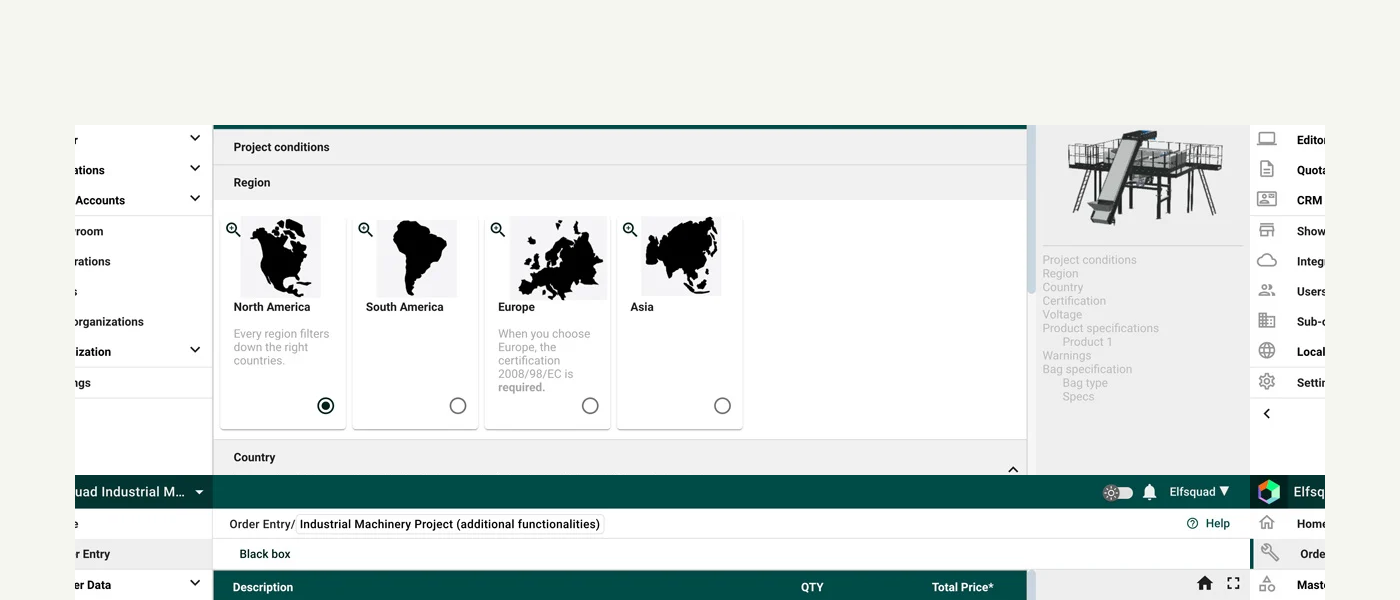
elfsquad visual configuration


Benefits of Guided Selling

Implementing this approach offers numerous advantages for manufacturing companies:

  • Improved Sales Efficiency: Routine tasks are automated. Your sales team spends less time chasing specs and more time closing deals.

  • Higher Conversion Rates: Customers get exactly what they need, configured correctly and priced accurately, from the first quote. That builds confidence and shortens the path to a decision.

  • Better Customer Experience: Complex buying decisions become straightforward. Customers are guided step by step, so they never feel overwhelmed or lost in options.

  • Accurate Quotes, No Errors: Every quote is generated from validated configuration logic. What goes to the customer is always correct, and what reaches production is always manufacturable.

  • Scalability and Flexibility: Whether you are adding product lines, new markets, or new sales channels, Guided Selling scales with your business. Your team manages the logic, not external specialists.

Implementing Guided Selling

To effectively implement this strategy, consider these steps:

  • Evaluate Your Current Process
    Start by identifying where things break down. Where do quotes stall? Where does engineering get pulled in unnecessarily? Where do errors reach production? That is where Guided Selling adds the most immediate value.

  • Set Clear Goals
    Define what success looks like. Shorter quote turnaround, fewer errors, more independent dealers. Specific goals make it easier to measure progress and stay focused.

  • Choose the Right Tools
    Look for a solution that your own team can manage. It should connect with your existing CRM and ERP, handle your product complexity, and not require developers or consultants to maintain.

  • Train Your Team
    Make sure your sales team understands how to work with the new process, and that the people responsible for maintaining configuration logic know how to keep it accurate and up to date.

  • Monitor and Improve
    Track quote accuracy, turnaround time, and error rates. Use what you learn to sharpen your configuration logic and keep the system aligned with how your business evolves.
"Elfsquad has not only streamlined our operations but also empowered our sales team to focus more on customer engagement."

Niels Beers
CEO at Demaco

How Guided Selling Changes the Buying Process

  • Traditional Sales vs. Guided Selling

Traditional sales processes rely on product knowledge that lives in people's heads. Every complex quote is a manual effort. Guided Selling replaces that with a structured process that anyone can follow, without losing the accuracy that engineering requires.

  • Personalized Recommendations

Guided Selling presents options based on what the customer actually needs. Not a generic catalog, but a filtered, validated selection based on their specific situation.

  • Less Decision Fatigue

Too many options slow customers down. Guided Selling removes irrelevant choices and keeps the process moving, so customers make confident decisions faster.

  • More Engagement, Less Back-and-Forth

When customers can see their configuration take shape in real time, the conversation becomes more productive. Less clarification, less rework, more forward momentum.

What is CPQ Software?

CPQ software stands for Configure, Price, Quote. It is the system that powers product configuration by automating configuration logic, pricing rules, and quote generation. When a sales rep or dealer works through a guided selling flow, CPQ validates every choice, calculates the price, and produces the quote automatically.
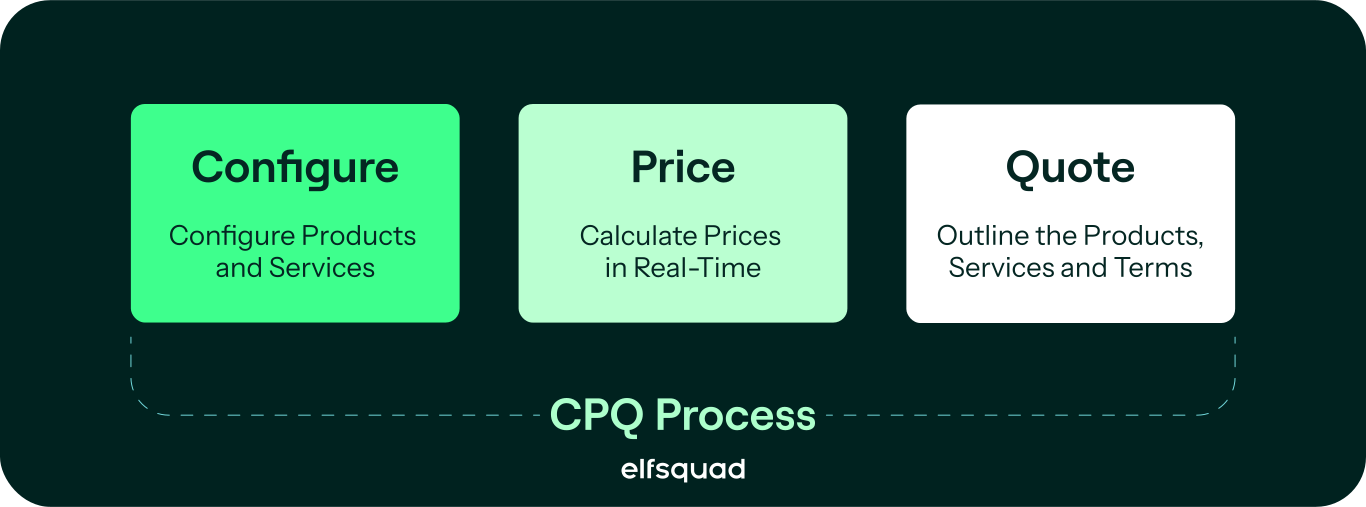
configure-price-quote-cpq-process-elfsquad-

Why Combine CPQ and Guided Selling?

  • Quotes are always based on validated product and pricing logic.

  • Sales reps can work independently without engineering sign-off on every order.

  • Customers receive accurate quotes faster, which builds trust and accelerates decisions.

  • The entire process from first question to final BOM runs without manual handoffs.


CPQ Technology and Tools

To implement an effective solution with CPQ software, businesses need a robust technology stack that includes:

  • CPQ Software: A reliable CPQ tool that integrates seamlessly with other software systems.

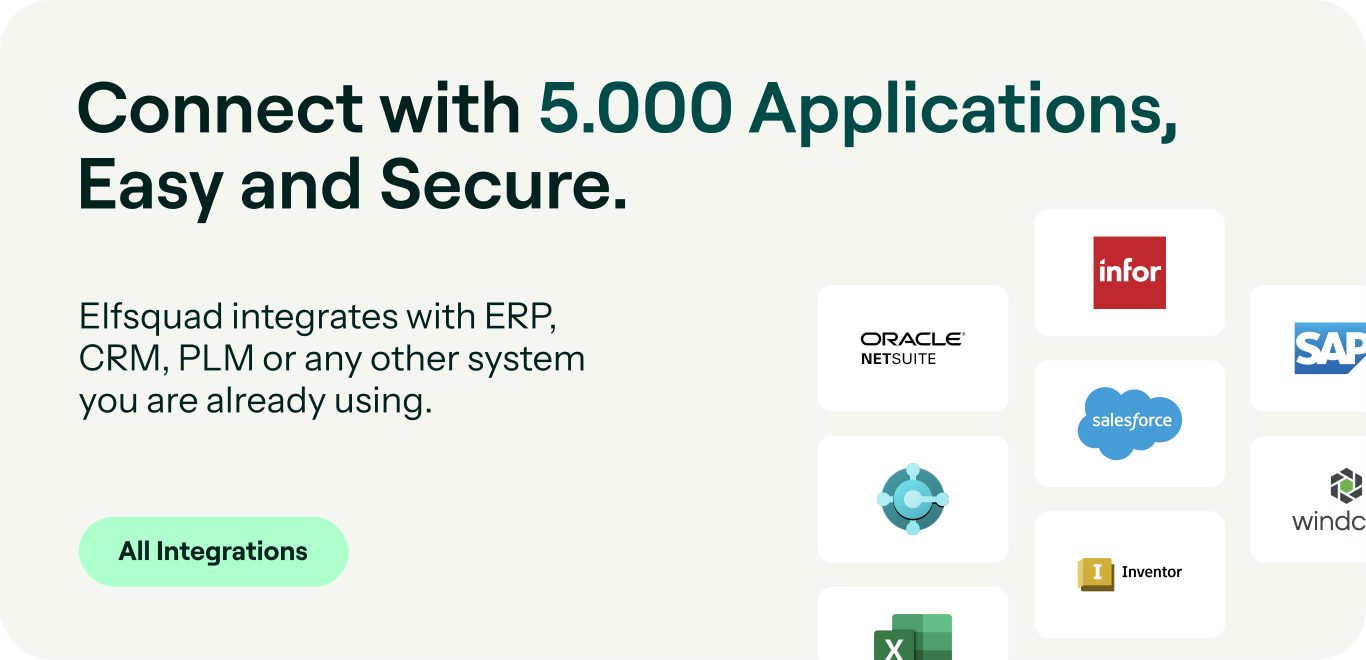
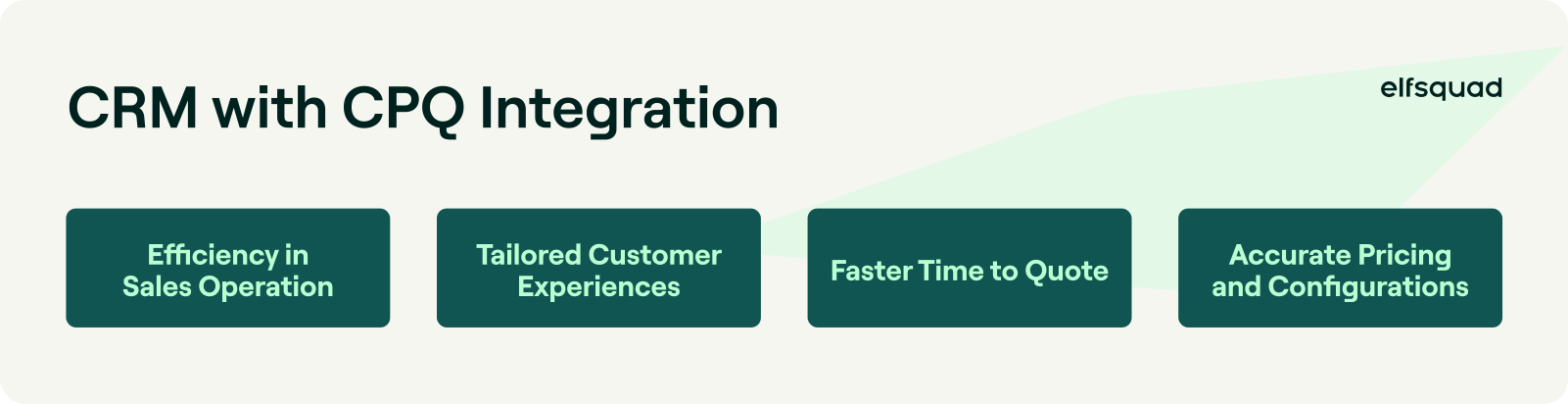
  • CRM Integration: Integration with CRM systems to ensure all customer interactions are tracked and analyzed.

  • Ecommerce Integration: For companies with an online presence, integration with ecommerce platforms is essential to provide a seamless customer experience.

  • AI and Analytics Tools: Advanced AI and analytics tools provide real-time insights and recommendations based on customer data, enhancing the selling process.
Best Practices for Guided Selling

Assess You Readiness

Is your product logic documented? Do you have the systems in place to support a structured configuration process? Is your team open to working differently? Honest answers to these questions will shape your implementation plan.

Set Objectives That Are Specific and Measurable

Reduce average quote time by X days. Cut engineering involvement in standard quotes by Y percent. Increase dealer self-sufficiency. Vague goals lead to vague results.

Choose Software Your Team Can Own

The right tool is intuitive enough for sales reps and flexible enough for product managers. It should not require a developer to update a pricing rule or add a new product variant.

Invest in Proper Onboarding

Your team needs to understand not just how the tool works, but why the process is structured the way it is. That understanding is what drives adoption and keeps the system accurate over time.

Keep Improving

Guided Selling is not a one-time setup. Review your configuration logic regularly, track where quotes still get stuck, and update the system as your products evolve.

crm-with-cpq-integration-configure-price-quote-elfsquad-

Overcoming Common Challenges

  • Resistance to Change

Sales teams often push back on new tools. Involve them early, show them how it reduces their workload, and make sure the first experience with the system is a positive one.

  • Integration With Existing Systems

The biggest technical challenge is usually connecting your CPQ system to your CRM, ERP, and CAD tools. Prioritize this early in the implementation so data flows cleanly from day one.

  • Keeping Configuration Logic Up to Date

A Guided Selling system is only as good as the logic behind it. Make sure someone in your organization owns this, knows how to update it, and does so regularly as products and pricing change.

  • Scaling Without Losing Control

As your product range grows, configuration logic can become complex. Build your models in a structured, modular way from the start so they stay manageable as your business expands.

Conclusion

Guided Selling gives manufacturers the structure to scale customer-specific solutions without losing speed or accuracy. It puts product knowledge into a system that anyone in your organization can work with, so sales teams quote independently, dealers operate without HQ support, and engineering stays focused on what matters.
If your current process depends on people rather than systems, Guided Selling is where that changes.

Request a Personalized Demo

Frequently Asked Questions About Guided Selling

What is Guided Selling and How Does It Work?

Guided Selling is a sales approach that helps streamline the sales process by guiding customers through product choices and configurations based on their needs. It uses a structured process to ask targeted questions and offer personalized recommendations. By integrating with CPQ software, Guided Selling automates configuration, pricing, and quoting, providing real-time, accurate quotes and ensuring a smooth buying experience.

What Are the Benefits of Using Guided Selling in the Sales Process

Implementing Guided Selling can lead to several benefits:

- Improved Sales Efficiency: Automates routine tasks, allowing sales teams to focus on high-value activities.

- Higher Conversion Rates: Provides tailored recommendations that align with customer needs, increasing the likelihood of closing deals.

- Enhanced Customer Experience: Simplifies complex purchasing decisions and delivers a more personalized buying journey.

- Accurate Quoting: Reduces errors and ensures pricing consistency through automated quoting.

How Can Guided Selling Improve My Sales Team’s Performance?

Guided Selling enhances sales team performance by:

- Reducing Manual Tasks: Automates configuration and quoting processes, freeing up time for sales reps.

- Providing Insights: Offers data-driven recommendations and insights, improving decision-making.

- Training Support: Helps new sales reps quickly get up to speed with streamlined processes and tools.

- Improving Efficiency: Speeds up sales and reduces time spent on complex configurations.

What Technologies Are Used in Guided Selling Solutions?

Guided Selling solutions often utilize:

- AI and Machine Learning: For predictive analytics and personalized recommendations.

- CPQ Software: To automate configuration, pricing, and quoting.

- CRM Systems: For tracking customer interactions and integrating sales data.

- Analytics Tools: To provide insights into sales performance and customer behavior.

How Does Guided Selling Enhance the Customer Buying Experience?

Guided Selling enhances the customer buying experience by:

- Providing Visibility: Simplifies complex product options and configurations.

- Personalizing Interactions: Offers tailored recommendations based on customer inputs.

- Reducing Decision Fatigue: Streamlines the decision-making process by focusing on relevant choices.

- Improving Engagement: Keeps customers engaged with interactive and dynamic sales processes.

What Are the Best Practices for Implementing Guided Selling?

Best practices for implementing Guided Selling include:

- Assessing Readiness: Evaluate current sales processes and technology infrastructure.

- Setting Clear Objectives: Define specific goals for the implementation.

- Choosing the Right Tools: Select software that integrates well with existing systems and meets business needs.

- Providing Training: Ensure the sales team is well-trained in using the new tools.

- Monitoring and Optimizing: Continuously track performance and make data-driven improvements.

Can Guided Selling Be Integrated with Existing CRM and CPQ Systems?

Yes, Guided Selling can be integrated with existing CRM and CPQ systems. This integration ensures seamless data flow between systems, allowing for accurate product configurations, pricing, and customer relationship management. The integration helps in aligning sales processes and improving overall efficiency.

How Does Guided Selling Differ from Traditional Sales Methods?

Guided Selling differs from traditional sales methods by:

- Structured Approach: Uses a systematic process to guide customers through their purchase decisions.

- Personalization: Offers tailored recommendations based on customer inputs rather than a one-size-fits-all approach.

- Automation: Automates configuration and quoting processes, reducing manual effort and errors.

- Enhanced Engagement: Provides a more interactive and engaging buying experience compared to traditional methods.

What Industries Can Benefit the Most from Guided Selling?

Industries that can benefit significantly from Guided Selling include:

- Manufacturing: For complex product configurations and custom solutions.

- Automotive: For configuring vehicle options and accessories.

- Healthcare: For custom medical devices and equipment.

- Construction: For managing complex equipment and service configurations.

How Does AI Play a Role in Guided Selling?

AI enhances Guided Selling by:

- Predictive Analytics: Analyzing customer data to provide personalized recommendations.

- Automation: Streamlining configuration, pricing, and quoting processes.

- Personalization: Tailoring product suggestions based on individual customer preferences and behaviors.

- Insights: Offering actionable insights into customer needs and sales performance.

What Are Some Real-World Examples of Successful Guided Selling Implementations?

- Automotive Industry: An automotive manufacturer used Guided Selling to streamline vehicle configurations, resulting in faster sales and increased customer satisfaction.

- Healthcare Sector: A medical device company implemented Guided Selling to automate product customization, reducing errors and improving efficiency.

How Does Guided Selling Help in Reducing Sales Cycle Times?

Guided Selling reduces times by:

- Automating Configuration and Quoting: Speeds up the process of generating accurate quotes.

- Providing Clear Recommendations: Helps customers make decisions faster by presenting relevant options.

- Streamlining Sales Processes: Reduces manual tasks and accelerates the overall sales process.

What Kind of Data Is Required to Set Up a Guided Selling System?

To set up a Guided Selling system, the following data is typically required:

- Customer Data: Preferences, buying history, and interaction details.

- Product Data: Specifications, configurations, and pricing information.

- Sales Data: Historical sales performance and customer feedback.

- CRM and CPQ Integration: Data from existing systems to ensure seamless integration.


How Can Guided Selling Help in Personalized Recommendations?

Guided Selling provides personalized recommendations by:

- Analyzing Customer Inputs: Using data from customer responses to suggest relevant products.

- Leveraging AI: Employing machine learning algorithms to predict customer needs and preferences.

- Customizing Offers: Tailoring product configurations and pricing to individual customer requirements.

What Are the Common Challenges Faced When Implementing Guided Selling?

Common challenges include:

- Resistance to Change: Sales teams may be hesitant to adopt new processes and tools.

- Integration Issues: Difficulties in integrating with existing CRM and CPQ systems.

- Data Quality: Ensuring accurate and up-to-date data for effective recommendations.

- Customization Needs: Adapting the solution to meet unique business requirements.

How Does Guided Selling Support B2B Sales Processes?

In B2B sales processes, Guided Selling:

- Facilitates Complex Configurations: Manages intricate product options and configurations.

- Improves Sales Efficiency: Speeds up the sales process and reduces manual effort.

- Enhances Customer Engagement: Provides a personalized experience for business clients.

Is Guided Selling Suitable for E-Commerce Businesses?

Yes, Guided Selling is suitable for e-commerce businesses as it:

- Improves Online Shopping Experience: Offers personalized recommendations and simplifies product selections.

- Enhances Conversion Rates: Helps customers find the right products quickly, increasing sales.

- Integrates with Ecommerce Platforms: Works well with online sales systems and tools.

Back to top