


Share this
by David Slot on Feb 19, 2026, 11:50:43 AM
For many manufacturing companies, there is a recognizable tension. As the product portfolio grows and customers expect more customization, complexity increases. Product variants multiply, engineering becomes a bottleneck, and quotes take longer and longer to produce. What was once a competitive advantage is slowly becoming a constraint.
This phenomenon, known as variant explosion, is one of the biggest obstacles to scalable growth for manufacturers competing on customer-specific solutions.
Is Product Complexity Really the Problem?
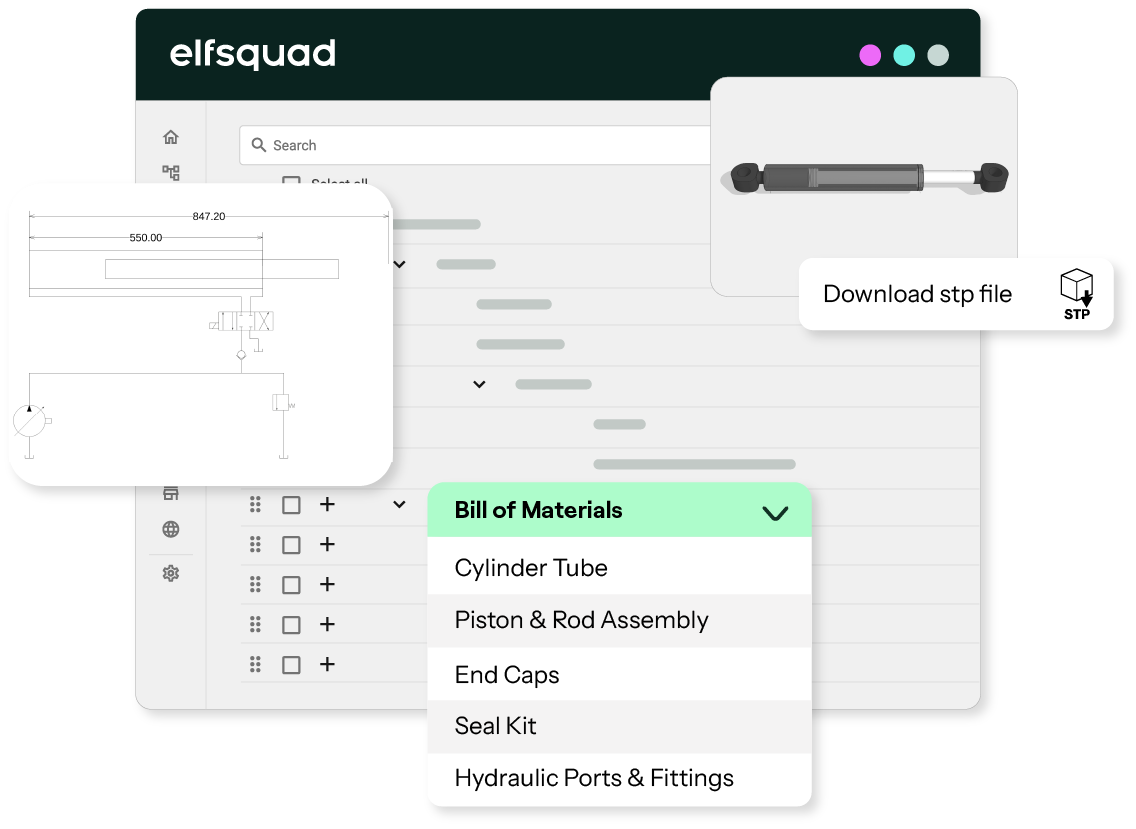
Product complexity is rarely the actual problem. The problem usually lies in how that complexity is organized. In many companies, crucial product knowledge lives in engineers' heads rather than in systems.
Pressure calculations, flow thresholds, material choices, and compatibility rules are checked manually. Sales cannot quote without engineering. Dealers depend on support from headquarters. ERP, CAD, and CRM run independently of each other. Hiring more people or expanding the product range only deepens this dependency. The systems were never designed to scale with the business model.
Does Standardization Mean Less Flexibility?
No, smart standardization is exactly the foundation that makes flexibility scalable. It does not mean offering fewer options. It means organizing product variation in a way that the business can manage and grow.
Thinking modularly and establishing clear product logic creates overview. Standard where possible, flexible where necessary. The product range stays rich and adaptable. The process becomes predictable and manageable. That is how you protect your competitive advantage instead of being buried by it.
Why Is a Product Configurator the Key to Scalable Product Configuration?
A product configurator captures rules, calculations, and dependencies in one shared system so that everyone can work with them, from sales to engineering to dealers. Combined with CPQ software, it turns your configure price quote process into something your entire organization can rely on, without specialist dependency.
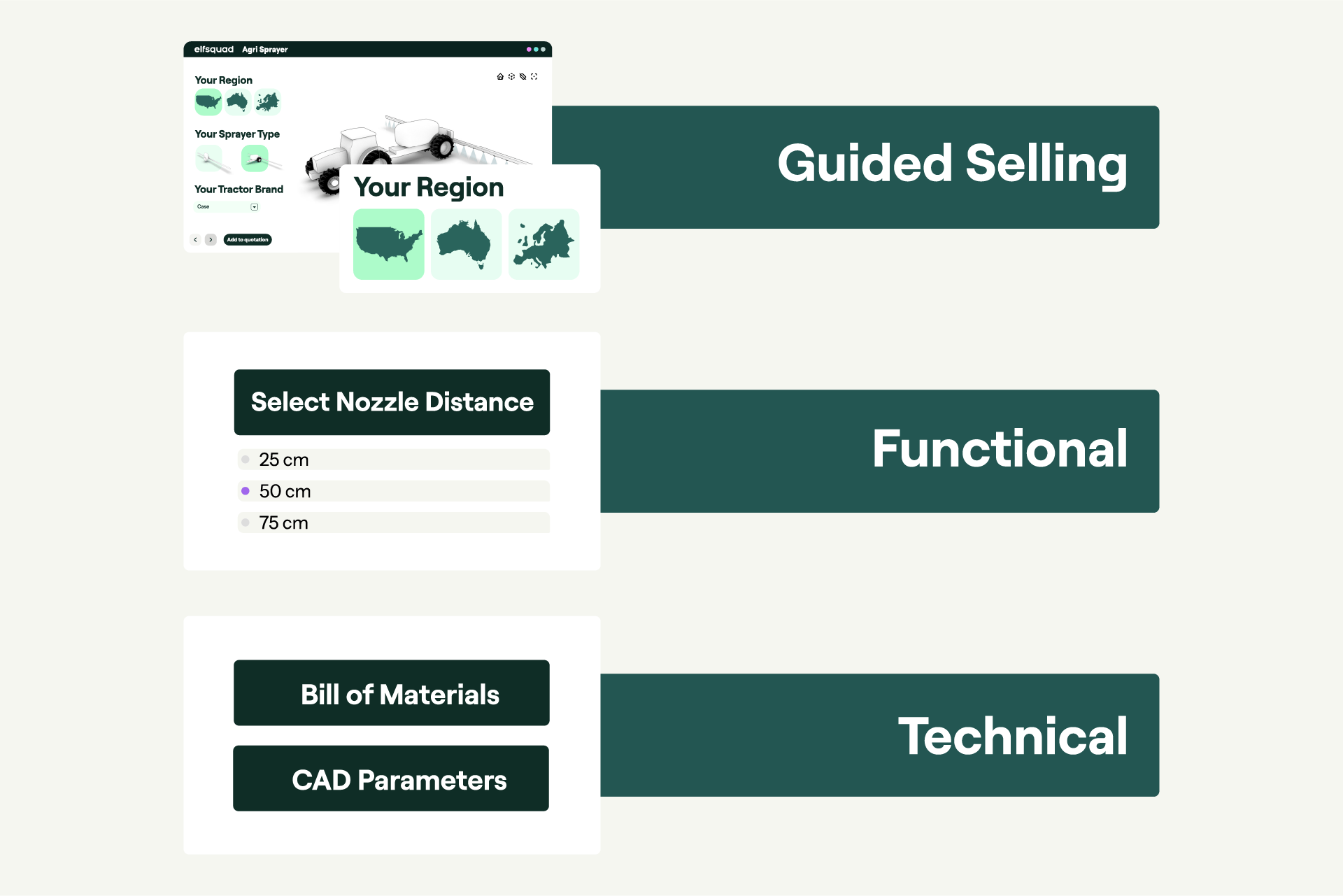
With guided selling, sales teams and dealers are guided through the right questions based on application and performance requirements. The system validates compatibility, performs calculations, and prevents misconfigurations before they reach production. The result is a scalable sales process that does not depend on specialists for every order.
How Does CPQ Software Reduce Dependency on Engineering?
By intelligently standardizing and digitizing product configuration, manufacturers shorten quotation lead times and reduce the pressure on engineering. Dealers and partners work independently. Configurations flow directly into ERP, CAD, and CRM without manual handoffs.
Many manufacturers achieve efficiency gains of up to 30% this way, without adding headcount or locking knowledge into custom processes. Take Giesen Coffee Roasters, who reduced their quotation runtime by 50% and achieved 30% more efficiency in internal business processes after implementing Elfsquad CPQ.
Control Over Complexity Is the Foundation for Growth
Scalable growth is not achieved by avoiding complexity. It is achieved by making it manageable. Centralizing product knowledge in a product configurator and designing smart standardization creates clarity, control, and room for innovation. Without the right structure, variant explosion leads to errors, delays, and margins under pressure. With the right structure, your team stays in control as the business grows, and your competitive advantage stays intact.
Find out how Elfsquad helps you master product complexity:
 or
or 